
Writings
The gift of writing is a spirit.

Writing is the umbilical cord of man’s civilization. Guess what! The idea of writing is null and void to others. Those who have the burden of writing struggle, stress, and cry in their inner selves because the writings within them burden them. Many have stories, however not all are writers. They are many, in fact they are many, even on this noble platform who struggle day and night with their inner selves the things they have to write by some obligation glued to their consciences. Writing is an indispensable necessity added to the doings of man that not even technology in its boisterous waves can take away. Refuse to write what inspiration has given you and I tell you, you will answer in the after life. Die with what you have and another generation will rise with it.
By Daniel Dickson Boateng

By Daniel Dickson Boateng
(PhD(EDL)MA(English and Creative Writing)MA(Literature) BA(English/Music)
Since 1957, the Ghanaian has celebrated, annually, the victory of having gained freedom from the rule of British (Empire)—Ghana became the first of the countries in the South of the Sahara to climb the pedestal of independence. The background of this achievement spelled the end of colonization—that colonization had been nailed to the tree—crucified and obliterated. Unfortunately, even though dead, the ghost of colonization still lingers in many spheres of the life and culture of the Ghanaian as though it were still the British in control. Indeed, they are still in control. In this writing, I contend that the language of the Ghanaian is still in the chains of the slavery of colonization and has been super-imposed by the colonizers language. In effect, I believe that the minds of most Ghanaianstoday have been plunged under the slavery of colonization;almost every Ghanaian seems to be living under the anesthesia and hypnotism of language colonization.
Over 250 languages are spoken in Ghana. The language of a people makes the fabric of a people. Any language lesson taught is culture learned. Before the coming of the European to the shores of Africa, and for that matter Ghana, the African’s language was pure, virgin and unadulterated. Language spoken was what the people were.
As the snake in the garden, seeking self-gratification and imperialism, the Imperialists coaxed and gave to the African the fruit of her language to eat. However, upon all the ills of colonization, formal education was transmitted through the medium of the language of the imperialists. At least with that, it is kosher to say the African does owe appreciation.
Having taught the Ghanaian to fish, the latter took unto himself the responsibility to take control of his own affairs—“the black man is capable of managing his own affairs” (Nkrumah, 1957). Unfortunately it is important to submit that colonization still lingers in the courts of the Ghanaian. I contend in this writing that the fruit of English Language which was given to the Ghanaian was not meant for anything than to probably help establish education to enlighten him—it was not meant to crumble the Ghanaian’s culture of language—it is unfortunate however, to realize that the latter is what has taken place in the eyes of all. The colonial master is gone but he has captured the culture of language in the pangs ofhis control.
Elsewhere in the diaspora, it is really a difficulty for other nations to accept that Ghana is a native English speaking country. In reality, Ghana is not a native English speaking country even though English is the lingua franca. So then what is the language of the Ghanaian?
As mentioned earlier in this writing, Ghanaians speak over 250 languages which are languages that propel the culture of the people, and these represent the culture and the people. Unfortunately, I submit in this writingthat today the language of the Ghanaian needs to be unshackled from the chains of colonization because no pure native Ghanaian language exists any longer; the shadows and the ghost of colonization has enshrouded the languages spoken in Ghana, chocking it and dragging it to the Golgotha.
The Ghanaian elite plays a major role in making the problem much more aggravated. The languages spoken in Ghana today, be they Twi, Dagomba, Housa, Bono, Fante, etc. are not spoken without being interspersed with English language. Every native language spoken today comes in sentences that have been stuffed withEnglish words. There are no pure words in Twi, Fante, Dagomba, Ewe, etc. Some things don’t even have names anymore in the Ghanaian’s true language or dialect except in English. Why is this so? What is the cause?
The media among others is one institution on which to lay the burden of blame. TV host, radio hosts and presenters, YouTube hosts, journalists’ interviews, reporting of events, news broadcasts on radios and so on make real the atrocity of the colonization of English on the Ghanaian’s language. They speak every language not without English interspersed. Can you imagine over hearing a radio presenter trumpeting to listeners to call in and speak a few words in Fante interspersed with English words. The callers do so and are complimented and given gifts. Was it just for fun? Do we know what it is we teach the younger generation when we do this? Why does the Ghanaian love to speak his or her mother tongue with English words in it? English has now become the background of the Ghanaian’s language. The Ghanaian’s dialects have now become Twinglish, Gaglish, Fanglish, Waalaglish, Dagomglish, Eweglish, Frafraglish and so on. If the Ghanaian really claims freedom from the rule of the British, then it is time to eliminate the British from Ghanaian languages. Until this is done, the disease of language colonization will continue to infect one generation to the other. What language will our children speak in the next 20 years ahead?
The Ghanaian must make a continuous conscious effort to speak his or her language with English language not being part of it—speak pure clean Twi, Dagomba, Nzema, Ewe, Ga, Frafra and so on. Japan, China, and other nations who also learn English can be examples to emulate in this discussion; they speak their language without English interspersed, even though they learn English as a second language. If the elite and intelligentsia of Ghana claim to be free and loyal to Ghana, the motherland, ifthe people of Ghana really accept and contend that true independence from the rule of the British has been established, then true decolonization of language must take place with a boisterous revolution. It is time to be who we should be and to shape our own identity as Nkrumah (1957) noted, “We are going to demonstrate to the world, to the other nations, hat we are prepared to lay our foundation – our own African personality.”
The Ghanaian today seems to have become proud and fallen in love with anything that is English and exotic. It is even so surprising that people in Ghana now proudly support European doings like soccer, whilst no one cares about soccer played in Ghana any longer. Today, People— adults, both elites and non-elite, old and young, are fans of Chelsea, Manchester United and Real Madrid, but not of Kotoko or Hearts of Oak, etc. The younger generation have taken it up. It is disappointing to realize that evenEuropeansoccer has also taken over African and Ghanaian soccer.
I walk in the streets of Dansoman in Accra, Ghana; I hear a woman speak to her daughter in English; she meets up with another friend and speaks Twi; meanwhile, I figure that the grammar of her sentences are crucified. If a parent can’t speak her own tongue to her daughter, then Ghana is really plunged deeper in the imperialism of language. Why would Ghanaians today want to speak English to their children instead of their mother tongue? We are not doing well at spoken English, and we are getting worse with speaking our own language.
You can’t believe it; but it is really seriously serious to hear most Ghanaians fumbling and floundering with all the struggles to read Twi, Fante or the other written Ghanaian languages in church. Most Ghanaians today read scripture and other writings in Ghanaian language with great difficulty. Why can’t we be good at handling our own language? And why do we struggle to make someone’s language ours whilst we can’t even tolerate or stand being good at ours? Shall we be jacks of all trades and masters of none?
Some Ghanaians who live in the diaspora are the most disappointing ambassadors of their culture and the villains of colonizing the language of their own land and of their children. It is brutally and gravely disappointing to find a Ghanaian home, comprising two Ghanaians, a man and woman who communicate with each other in Twi; yet the children they have raised cannot speak Twi, or Fante or their own mother tongue. Their children speak English whilst they speak Twi. Sometimes, the most unpardonable thing is to hear a Ghanaian speaking English to a child who knows mom’s English is bad —“Kofi,you did not did the homework?” “She didn’t came.” No one can judge you for the errors you might not even make in your own mother tongue. Who else can speak the correct vocabulary of your own language to your child but you? What is the fun about making everyone know that you live abroad, and that your children speak English? Oh! How disgraceful it is to have a Ghanaian say “Oh, as for my son, he doesn’t speak Twi?”When of course, you raised the child yourself. How can you bury your own culture and language because you live abroad? It is even too unpardonable to let your children speak English at home in Ghana, turning your back at your own language. Oh! Where is your wisdom?
English cannot be the Ghanaian’s first language because it is not. It is the language of the colonial master, period! Even though language was robbed from our beloved ancestors who were enslaved, what they could not take away from us at home should be protected and preserved.
Should we be told again of how wealthy and rich the African is in the use of his language? The Ghanaian used to “value words for the meanings and nuances. Language was not a mere string of words. It had a suggestive power well beyond the immediate and lexical meaning. Our appreciation of the suggestive magical power of language was reinforced by the games we played with words through riddles, proverbs, transposition of syllables, or through nonsensical but musically arranged words…the language of our evening teach-ins, and the language of our immediate and wider community, and the language of our work in the fields were one.”(WaThiongo, 1971). Can you imagine how beautiful and enthusing it could be when the African begins to speak to his children or other Africans around in his own language because others should not get to know what is being said? No wonder, the power of language is what the slave master saw and so decided to separate slaves from the same tribe; it could cause the former’s demise; thus he turned them into a Babel, robbing the enslaved African from language.
Meanwhile, it must not be forgotten that honorable writers like Chinua Achebe, Ngugi Wa’ Thiongo, AyiKweiArmah, and others Africanized English in their writings and so we can boast of African literature today. In as much as we soar in the use of the English language, we should not let it destroy what we already have; it should rather be the channel for the transmission of the rich culture of the Ghanaian people; English language should not be used to bulldoze and graze the graceof our language endowed with rich oral literature.
References
Nkrumah, K (1957). Independence Speech. Accra, Ghana. Retrieved from https://panafricanquotes.wordpress.com/speeches/independence-speech- kwame-nkrumah-march-6-1957-accra-ghana/
Wa’ Thiongo, Ngugi. (1971). Decolonizing the Mind. Retrieved from http://www.brandeis.edu/diversity/events/diversitypdfs/Decolonising_the _Mind.pdf
The Effect of Bias on Selection and Recruitment
Daniel D Boateng, PhD
The process of selection in human resource management is one that involves choosing the best and most suitable candidates among applicants who apply for a job (Chand, 2015). It results in the elimination of unsuitable candidates and uses scientific techniques for the appropriate choice of a suitable candidate for the job. Many scholars have advanced definitions for what selection entails in Human Resource Administration. Stone (1982) defines selection as a “process of differentiating between applicants in order to identify (and hire) those with a greater likelihood of success in a job” Durai (2010) acknowledges Dale Yoder’s definition for selection, asserting that it is the process by which candidates for employment are divided into two classes: those who will be offered employment and those who will not. Durai also mentions O. Donnell’s definition, that it is “the process of choosing from among the candidates, from within or from the outside, the most suitable person for the current position or for the future position.
In light of the discussion above, it will be appropriate to assert that in terms of human resource administration, selection can be described as all measures put in place by the human resource unit of an organization to get deserving candidates hired for available positions, with unqualified ones eliminated. According to Durai (2010), there is no commonly accepted selection process available, thus depending on the job type, an organization may adopt their own process depending on its nature and requirements. Ipso facto, the main objective of the selection process in Human Resource Administration is to be able to tell a good and qualified applicant from one that is not, to distinguish applicants who are likely to perform well in the job from those who are not. It behooves on the organization to adopt its own style of selection provided the objective of getting the suitable applicant can be reached.
Selecting a candidate for recruitment could be a very sensitive thing for a human resource unit and could come with many lapses no matter how accurate the measures put in place are because humans are simply not infallible but saturated with a natural instinct of biases. Thusly, this essay discusses the fact that biases are a very common phenomenon which may inevitably affect the process of selection in relation human resource administration. When I had applied to several employers for a job, one employer called and asked me to come for an interview. Excited, I got dressed in my very best black suit with a white shirt and black tie. I was confident in what I wore. I hired a taxi and off I got to the office. I asked for the name I was given. When she came out and saw me, she asked, “are you Daniel?” I said “yes, you spoke with me an hour ago and you gave me directions here.” “I am sorry the position is filled.” She said coldly to me. I asked again: “How long ago? but I just spoke to you” She said nothing and walked back into her office. I wondered what the reason was. I saw it that she was not expecting my type of person.
According to Babcock (2006), analyses conducted by a Harvard University-led research team showed that it is entirely possible that an entire team responsible for selection are biased and don’t even know it. Greenwald and Banaji (1995) described biases as unconscious attitudes that automatically trigger
off, making us evaluate different people or situations we encounter, without a person’s full awareness. If
you are a recruiter, you should be asking yourself if unconscious attitudes automatically trigger off in you.
If diversity is a quality that makes America stronger then it is important that people who stand at the gates of human resource unit reckon and reconsider working and staying alert on biases. Babcock (2006)
avowed that Bias—hidden or overt—can have implications on decisions as an organization selects candidates to join its outfit. It also impacts how candidates are evaluated, promoted, and compensated.
I have seen many companies in America in which the number of the staff members of a particular ethnic
group outnumber all other ethnic groups because the hiring manager or the boss is of that ethnic group. In effect nepotism has clouded true judgement in the selection process.
The Evils of Bias in the Process of Selection
When bias clouds the decision-making process of any human resource team in charge of an organization’s selection and recruitment process, the negative effects are obvious.
Babcock (2006) noted that when bias creeps into the process of selection it can affect the turnover and the quality of life of employees. Babcock continued to point out that it may lead to lawsuits because where there is a display of bias, there is also the resultant effect of discrimination. Are these not prevalent in our world today?
Bias decreases productivity, and leads to a loss of human capital, a resultant effect of the right persons not being selected. When recruitment is done based on a biased selection, it breeds a subtle strategy for creating differences among groups which hurts and crumbles an institution’s journey towards success. When nepotism and biases become so glaring that prospective candidates get affected, it drains away customers as well as productivity.
Hidden bias can leave employers very susceptible to shifting demographics, and organizations that allow bias to creep and meander into selection and recruitment processes are bound to not properly hire, train, engage or motivate workers. Besides, such practices leave the organization at a competitive disadvantage.
Bias and Selection in Higher Education
Studies in academia have shown the existence of the influence of bias in the selection process of faculty. In a study, Steinpreis et al (1999) found that female and male psychologists in academia were more likely to want to select a male early career researcher than a female who is equally qualified. This clearly indicates how bias operates naturally in all categories of people.
In this case of the psychologists, whatever the orientation they might have had, or whatever may have triggered off their own evaluations of male researchers and female researchers seemed to be embedded in their minds, thus making them over rule all criteria used in selection. With that hidden in their minds, only males were okay to select for the research job, despite having a qualified female. If this has been the norm, the faculty that would oversee research in this psychology department of academia will only be male. The presence of a female in the team might lead to negative problems. Another study by Moss-Racusin et al (2012) showed bias as regards who could be selected for a laboratory manager role.
Members of faculty rated male applicants as more competent than equally qualified females, besides they slated for males a higher starting pay than for females who were equally qualified. Trix and Psenka (2003) also mention the heavy presence of unconscious bias and gender schema in higher education. Trix and Psenka discussed that an examination of letters of recommendation, essential for new jobs and for promotion and tenure, revealed gender bias. It was found out that females were about two and a half times more likely than men to receive short letters of minimal assurance; these letters were twice as likely to contain “doubt raisers” such as negative language, faint praise, or irrelevancies, and the disposition to include references to personal life. Attention to training and teaching was more common in letters for women, whereas research, skills and abilities, and career received more attention in letters for men.
Recommenders unconsciously stereotyped based on gender when they were writing their letters
(Trix & Psenka, 2003).
Beckett (2009) to looked into problems associated with selection and recruitment in schools. In the study, findings from heads of schools interviewed indicated that there is not enough screening of applicants, documentation and selection are not effectively done. This consequently does not rule out the possibility of bias. When it comes to recruitment, the mere mention of recruitment not well done and the fact that heads of educational institutions are not involved in the selection and recruitment process, as noted by Beckett, is an indication of the fact that there is the preponderance of the presence of heavy bias in the process of selection which also leads to a bias recruitment.
Another element of bias that influences selection is power and authority (Esch, 1994).
Esch discussed the fact that school boards usually influence the process of selection. He asserted that school boards select not by reason of getting the appropriate qualified candidate, but they select on who will operate within the confines of the existing political culture of the board (p. 9).
Here, the element of bias is already established because no applicant is qualified until found qualified by the power and authority of the board—there can be no fairness in the process of selection whatsoever.
Thompson & Walsh (2015) avowed that bias exists in schools with regards to racism.
Thompson and Walsh asserted that most schools have around 1-in-20 faculty that are black in some educational institutions. This indicates that only few blacks are selected for recruitment.
The authors continue to mention the fact, that the only reason that could justify the issue of very few black faculty recruitments is bias and discrimination. Flaherty (2015) also mentioned that even though some schools emphasized recruiting people of color for faculty positions, it has been neglected as a result of the heavy presence of implicit bias which has influenced the selection and recruitment.
Conclusion
Selection is a very sensitive area in the Human Resource department. It is very important for leaders to keep eyes on and monitor the activities of this department because the success of any educational institution or any organization is determined by type of faculty or staff that are selected and recruited to accomplish the goals of the institution. When job seekers fill applications, there are always declaration of statements from organization that indicate they respect diversity and have no discrimination or any biases yet it is unfortunate to note that these biases, racism and discrimination has become a creepy needle that keeps gnawing at even renowned and most prestigious organizations and institutions when it comes to selecting candidates for recruitment.
Today, if you do not know anyone from within, selection will not be your friend. Even though bias, discrimination, and racism are a human idiosyncrasy, it is really an imperative need for organizations and most especially academia to disallow it from breeding.
It must not be allowed the oxygen to breath. The culture of education will be of a null and void if little foxes like these can operate. It is nauseating to have little evils like selection and recruitment biases crawl an advance nation like America when it is a role model for other nations
Reference
Beckett, T. R. (2009). Teacher recruitment and retention in a hard-to-staff, at-risk, rural school district in southeast south carolina that serves high populations of children of poverty (Order No. 3368763). Available from ProQuest Dissertations & Theses Full Text: The Humanities and Social Sciences Collection. (305163228). Retrieved from http://search.proquest.com/docview/305163228?accountid=35796
Chand, Smriti. (2015) Selection: “Meaning and Steps Involved in Selection Procedure” Retrieved fromhttp://www.yourarticlelibrary.com/human-resources/selection- meaning-and-steps-involved-in-selection-procedure-with-diagram/32350/
Durai, Pravin. (2010) Human resource management, Dorling Kindersley(India) Pvt.Ltd., Pearson
Education: South Asia
Flaherty, Collin (November, 2015) Demanding 10 Percent. Retrieved from https://www.insidehighered.com/news/2015/11/30/student-activists-want-more-black- faculty-members-how-realistic-are-some-their goals
Steinpreis, RE, Anders, K, Ritzke, D (1999) ‘The impact of gender on the review of the curricula vitae of job applicants and tenure candidates: a national empirical study’. Sex Roles 41(7/8): 509–528
Thomas H. Stone. (1982) Understanding Personnel Management, Dryden Press.
Thompson, Carolyn & Walsh, George M. (November, 2015) “Few Black Faculty Are Employed
At Flagship Public Universities” Retrieved from http://www.huffingtonpost.com/entry/black-faculty-flagship- universities_us_564b67d2e4b08cda348ad255
Moss-Racusin, CA, Dovidio, JF, Brescoll, VL, Graham, M & Handelsman, J (2012) ‘Science faculty’s subtle gender biases favor male students’. Proceedings of the National Academy of Sciences for the United States of America 109(41): 16474–16479
Trix, F., & Psenka, C. (2003). Exploring the color of glass: Letters of recommendation for female and male medical faculty. Discourse and society, 14, 191-220.
Leadership and the Challenges of Diversity in Higher Education
Daniel Dickson Boateng, PhD
Keiser University
Leadership is very instrumental in any organization. Without it, an institution could stand the highest propensity to crash. Like the snake whose head is severed, the rest of the reptile is only a rope.
There is no doubting that fact that in education, leadership makes a great difference (Wahlstrom, Louis, Leithwood, & Anderson, 2010). Ipso facto, without a leader, there is probably no surety of endorsing success or achievement in an organization. A leader leads the way into the path of success.
It is important to emphasize that in as much as the presence of leadership is of a priceless worth to any organization or an educational institution, the presence of untold hardships and challenges come in its wake. In his play, Henry IV, Part II, William Shakespeare writes, “Uneasy lies the head that wears a crown” (line 1735).
In effect, leadership is not an easy task because it is confronted with myriads of challenges.
Rabinowitz (2016) asserted that leadership is beset with challenges both to the leader’s abilities and to the leader as a person.
Leaders constantly seek to achieve and bring changes; change brings along its trail, challenges, and no matter how good a leader maybe, he or she can’t stop the winds of challenges from blowing. One of the greatest challenges that confront leadership in higher education in America is diversity.
This discourse examines diversity as a great challenge that nags educational leadership in America’s higher education. Diversity Pant and Vijava (2015) defined diversity as the way in which people differ from each other. Pant and Vijava asserted that these differences among employees could arise due to their age, gender, race, ethnicity, personality, educational background, organizational function and tenure, etc. In effect, diversity means understanding that individuals are unique and are individually different.
Patrick and Kumar (2012) avowed that diversity is a composite of differences in people that make them impact how they see themselves and how they see and yoke with each other at work. By diversity, therefore, what comes up is a look at types of race, ethnicity, gender, sexual orientation, socio-economic status, age, physical abilities, religious beliefs, political beliefs, or other ideologies. In the context of a higher educational institution, diversity may be considered as all those differences among students, faculty and staff which impact how every member of the college or university community views and perceives a fellow student, faculty or staff, and which affect their relationships as students or employees.
America and Diversity in Education
America is like a plate of salad beautifully prepared with several vegetables. There are people from all nations that make the population of America. Similarly, schools in America are populated with students, faculty and staff who are from all over the world. In effect, the population of America’s schools is diverse. Great Schools Staff (2016) noted that the United States is a culturally and ethnically a diverse nation and schools have become diverse too. The United States Census Bureau asserted that as the year 2100 approaches, the US minority population will climb to become the majority with non-Hispanic white falling into a forty percent category of the United States population.
The American Association of University Professors asserted that there is a dramatic transformation in relation to the composition of the population of America’s colleges and universities throughout the past generation, and there is none of its kind in the history of Western higher education. Gudeman, Alger, Moreno, Maruyama, Marina and Wilds (2000) assert that in the early 1960s, apart from students who attended historically black colleges and universities, only a relative few Americans of color enrolled in college in the United States. Presently, up to about one in five undergraduates at four-year schools is a minority. Gudeman et al. (2000) further discussed that many traditionally white colleges and universities that respect students’ concern began to recognize their inability to provide educational opportunities to African Americans in particular. They also became aware of the many judicial decisions in relation to equal educational opportunity. According to Gudeman et al.,the most influential issue that projected diversity in schools was the landmark of the 1954 Supreme Court decision in Brown versus Board of Education which led to the activation of the integration of many public-school systems. This was a kind of its own, a multicultural revolution which kicked off in large measure, making colleges and universities increase efforts to recruit as many minority students as possible. The discussion above makes it quite clear that the fever of diversity in American schools has since long been an established phenomenon because of the multi-ethnic background of the nation. Gebeloff, Tyson and Scheinkman(2016) also discussed the integration of people from other ethnic backgrounds. Gebeloff et al. pointed out that the enrollment of Hispanic and Asian American schools has increased by more than five million since the 1990s and that these increases occur not just in long-term immigration nidus, but in places as far flung in other states such as Marion County, Oregon Sevier County, Arkansas to Colfax County, Nebraska, and so on which consequently affect the population in schools. Here again, it establishes the fact that diversity is one underlining background to American Education.
Maxwell (2014) referred to the National Center of Education statistics in terms of looking at the different groups of people that make the face of America’s education. Maxwell discussed that there is a dramatic growth in the Latino population and a drop in the population of whites, and, to a lesser degree, by a gradual rise in the number of Asian-Americans. Maxwell, in pointing out the diverse nature of the students in the country’s schools, writes that the United States needs to vastly improve the educational outcomes for its diverse majority of American students because their success is inextricably linked with the well-being of the nation.
As mentioned earlier in this discourse, diversity in American education does not relate only to students but also faculty and staff that form a composite of the population of the people that make education in the country. The American Federation Teachers (2010) pointed out that the cross section of the people in the country that make faculty in education, in all levels of education, is the total of people of all ethnic backgrounds — Asians, African Americans, Latinos, Africans etc. The American Federation of Teachers asserted that the diversity of student population in the country is also represented among faculty. Thusly, the Federation argues that“faculty members from racial and ethnic minority groups have extended the breadth of scholarship in traditional disciplines and lead in developing new areas of study” (American Federation of Teachers, 2010). Taylor, Apprey, Hill, McGrann, and Wang(2010) postulated that America’s faculty in higher education levels are made of professorates who come from a multi-cultural backgrounds and thus establish the diverse role models for the nation’s changing demographics.
Another important point that establishes the diversity of faculty in American education is the National Center for Education Statistics (NCES 2008) which reported that under 20 percent of the nation’s professoriate is made up of persons of color— blacks/African Americans (5.6 percent), Hispanic/Latinos (3.5 percent), Asian Americans (9.1 percent), and American Indians (1.4 percent). This is another indication that America’s education has a platform that’s made up of diversity and it is an excellent picture of diversity painted. The U.S. Census Bureau recorded that minority groups constitute roughly one-third of the U.S. population (Census Bureau 2009). The record here presented by the census bureau shows the presence of diversity in the nation; thus, that education in America has a platform of diversity is an established truism.
Challenges of Diversity
“The diversity of a university’s faculty, staff, and students influences its strength,productivity and intellectual personality” (Fine and Handelsman, 2010). Fine and Handelsman argued that benefits of diversity out-weigh any challenges that comes along its trail. They further mentioned that diversity of experience, age, physical ability, religion, race, ethnicity, gender, and many other attributes are a source of enhancing the richness of the environment of teaching and research in as much as education is concern.
Despite the argument that diversity is a very excellent attribute of success not only in the field of education, but in various fields of endeavor, diversity can also be a very excellent platform of serious challenges and confrontations for many leaders in educational leadership.
The Challenge of Gender Biases
It is not a new thing in the society to hear that people representing a gender type have been treated unfairly. This is one area where leaders of educational institutions come face to face with trouble dealing with such issues. The issue of gender discrimination presents itself, even in the face of the success of diversity, as an inevitable phenomenon to deal with. Sheridan and Winchell (2006) observed that studies have shown that faculty members that are women and minority are considerably very dissatisfied with many aspects of their jobs in relation to their male faculty members. The areas according to Sheridan and Winchell range from teaching and committee assignments, involvement in decision making, professional relationship in terms of dealing with their colleagues, promotion and tenure, inequities in salary and overall job satisfaction.
According to Taylor, Apprey, Hill, McGrann, and Wang (2010), women in the professoriate have made important advances on college and university faculties in recent years. Their presence in faculty lags far behind in numerous disciplines than that of men, with reference to science, technology, engineering, and mathematics (excluding the biological sciences). Taylor et al. asserted that in some disciplines like electrical engineering, mechanical engineering, and physics, women make up fewer than ten percent of the professoriate among the top fifty research universities. Taylor et al. avowed that women of color occupy worse situations as college and university faculties. This has been a lingering challenge in higher education; women are relegated to the background, why? They are part of a diverse faculty, and their being part of the faculty as individuals has calculated their woes of being relegated to the background.
Nelson (2007) also observed in his findings after a study that only three hundred women held positions as faculty members in top fifty research universities. Nelson also observed that when the biological, social, behavioral, and economic sciences were taken out from the mix, fewer than one hundred women remained. In effect, women are not allowed enough positions as faculty in higher educational institution. If diversity has to do with all being inclusive in America, then the issue of women being relegated to the background could be bile to assertions that diversity is a platform form success, thus educational leadership has a challenge to deal with.
O’Rourke (2008) pointed out as she discussed the problem of diversity in relation to women scholars in academe. She asserted that women suffer in relation to too much loads of student service and advising related directly to their visibility.
O’Rourke mentioned that such women faculty members reported that the extra service they did is expected only for them, as underrepresented scholars, meanwhile their own academic interests in respect of studying important social, political and economic issues involving race and gender are most of the time devalued during faculty promotion processes.
Furthermore, Salter and Persuad (2003) noted that some colleges have women who are in the minority and fall among the male majority; such group of women feel unwelcome and discriminated against. The authors observed that women in minority experience sexist language, and disparaging views against women. In classes where such students face these problems, Salter and Persuad asserted that they face differential treatment from professors.
In the classroom, where teachers serve as leaders over their own students, the challenge of diversity surfaces many a time. In the course of my teaching in college, I have come face to face with the challenge of dealing with a few classes in which I had students who will not participate in class because they are the minority in the class. In an English 101 class for fall 2015, I had six male students and two female students. Class sessions were dominated in participation by the males. The two ladies in the class never talked, and never answered any questions asked. Besides, they refused to do presentations in class. This situation goes congruent with the assertion of Salter and Persaud (2003) that women who are in the minority feel unwelcome in the environment where they are enshrouded by the majority. This is a big diversity problem that is not probably faced by only women in college, but also faced by men who fall in the same situation. Teachers face this great challenge in diversity as leaders in the classroom.
The Challenge of Sexual Orientation
Sexual orientation issues are a very big problem that leaders of educational institution are confronted with in recent time. It is important to note that by diversity, one of things that comes with the package is that any environment of diversity in America today can never rule out sexual orientation; gays and lesbians, as well as bisexuals form part of the society. Unfortunately, there seem to be a struggle everywhere, as members of society suffer the negative ambience of fully accepting those of different sexual orientation apart from the straight orientation.
People of the LGBT community face problems in higher education. This is a big challenge because most students or faculty who identify with the LGBT community face discrimination and other issues which make them feel unwelcome. There are many a people who have resigned or declined being part of a college or university because of the negative experience in the community. Harper and Schneider (2003) avowed that Lesbian, gay, bisexual, and transgendered (LGBT) people continue to experience various forms of oppression and discrimination in North America and throughout the world, despite the social, legal, and political advances that have been launched in an attempt to grant LGBTpeople basic human rights. This is a challenge that educational leadership in higher education have to contend with in so far as education and diversity is concerned
Rankin(2003) added that studies have showed that students who get tagged as minority because of their sexual orientation, for example, being gay, lesbian, or bisexual, feel unwelcome and isolated. On many occasions many of such students fall off their objective of achieving the
goal of their academic endeavors. Rankin’s assertion holds t
rue in relation to a student in my class. Other students in class did not interact freely with him because he was gay. He had no friend; before the semester went to an end, he dropped the course. When asked why he dropped the course, his answer was that he could not stand the way other members of the class related to him (Dubois S, Personal Communication, October 7, 2015). As a professor, this was a big challenge, one difficulty to deal despite educating students to respect each other irrespective of ethnic, sexual, or religious background.
“Gays and Lesbians have a very big challenge, in fact a very complicated situation, other members of faculty are cold towards you, they do not respond even when you say hi, nobody relates to you properly. They make you feel you are not human, and this makes work here very difficult. Sometimes I feel like just leaving the teaching field” (Godfred W, personal communication, December 3, 2015). This is a clear indication of the ongoing challenge that leaders face in relation to diversity. In a case like this, it gets very complicated to handle, and this problem might linger for a while as leaders might only just look on. Some of these problems continue to become convoluted to dealt with; they probably might continue to be part of society’s response until things change culturally in the course of time.
The Challenge of Unconscious Biases in Diversity
One of the most nagging problems that seems to lie unseen in the background of the diversity of many higher educational institutions is unconscious bias and assumptions and leaders are confronted with them. Assumptions and unconscious biases are human instincts and are almost as inevitable as any human idiosyncrasy. Thusly, they will continue to linger about every human institution like a higher institution.
Selection of faculty during recruitment is one area where leaders are confronted with the challenge of bias and assumption due to diversity. Leaders often delegate subordinates and department heads to be in charge of selection and recruitment. In a diverse institution, there is always the highest tendency for those in charge of selection to be influenced by candidates of their own kind. For example, it could be so unconscious for any who is selecting two candidates who qualify to naturally pick the one of his or her own kind of ethnicity.
In academia, studies have shown that there are biases in the selection process of faculty. In a study, Steinpreis, Anders, and Ritzeke (1999) observed that female and male psychologists in academia were more than likely to select a man career researcher than a woman who is also equally qualified. This is clear indication of how bias operates unconsciously and naturally in all categories of people. Here, the psychologists, with respect to whatever orientation they might have experienced, or whatever may have set off their personal evaluations of male and female researchers, seem buried in their minds, thusly, influencing them over declining all criteria used in selection. Considering this, in the back of their minds, they find only males as the appropriate candidates to select for the research job, in spite of having qualified females. A look at this situation shows that faculty that would take charge of research in this department of psychology will only be males. It also means that the presence of females in this team might lead on to complicated issues. If there was no diversity in question, if there were only females present, then there would not be the question of discriminating against women or being bias against women who would equally fill positions as candidates.
Babcock (2006) has argued there is a hidden bias that can leave employers very susceptible to changing their demographics, Babcock avowed that organizations that pave way for biases to crawl into their selection and recruitment processes, and thus, are bound not to properly hire, engage, train, or motivate workers, leave the organization a great competitive disadvantage. Diversity is the background to all these problems discussed here.
Moss-Racusin et al (2012) identified bias in a study in relation to who could be selected for a laboratory manager position. Faculty Members rated male applicants more competent in relation to equally qualified females; besides, higher starting pay was slated for males than for females who were equally qualified for the position.
According to Trix and Psenka (2003), the presence of a heavy unconscious bias and gender schema exist in higher education. Trix and Psenka mentioned that an examination of letters of recommendation were done in relation to new jobs for promotion and for tenure; unfortunately, the examination revealed gender bias. The revelation showed that females were about two and a half times more likely than men to be given short letters of assurance. The letters that were given were twice as likely to contain “doubt raisers”, for example, faint praise,negative language, or irrelevancies, and the propensity to include references to personal life. Trix and Psenka observed that attention to training and teaching became common in letters allotted to women. Meanwhile, research, skills and abilities, and career attracted more attention in letters for men. Those in charge of examining the recommendation unconsciously injected stereotype into the process with emphasis on gender when the letters were being written (Trix & Psenka, 2003).
The Challenge of Assumptions in Diversity
Many times, there have been assumptions in the face of diversity. Biernat, Melvin, and Thomas (1991) mentioned that there is a common social assumption in higher education setting. Biernat et al. asserted that evaluators often over-estimate in their doings in the higher education level. This has become a challenge that leaders find difficult to navigate about. There are complicated problems emanating from diversity and are difficult to control. For example, in a study in which evaluators were shown photographs, the heights of males they saw in the photos were over-estimated. In an environment of diversity, such as the higher education setting, these are inevitable. The results of this study by Monica et al. indicate the natural presence of assumption in individuals due to diverse cultural orientations, which naturally affect, and influence assigned officers in their doings.
Biernat and Melvin (1994) also found the presence of assumption in a study they conducted. Evaluators were asked to rate the quality of verbal skills as indicated by vocabulary definitions. The study found that when they were told that African Americans were the providers of the definitions, evaluators gave a low score in relation to White Americans. As mentioned earlier, these are problems that beset educational leadership, and are very complicated to handle.
The Challenge of Racism in Diversity.
Racism is another very serious challenge in diversity; higher education levels face the problem of racism, among faculty and among students. Studies have shown that minority faculty in higher education often face exclusion, isolation, alienation and racism at schools where one ethnicity compose the majority. This is a challenge because it kills motivation in not only students but in staff and faculty (Rankin, 2003). The issue of racism comes as a result of diversity. Among different groups of people all coming from different ethnic backgrounds, there are some who feel themselves more respectable than others, and this is a human disposition which is inevitable.
According to the American Federation of Teachers(2010), the representation of racially and ethnically underrepresented groups in the ranks of college and university faculty is not proportional because it is lower compared to general population or with the demographics of the undergraduate and graduate student populations who are the composition of the training pool for higher education. Here is the challenge that confronts the leader of education, Power is delegated to subordinates to go about recruitment. At the end of the day some are underrepresented. That is how diversity comes along with its own challenges that leaders have to deal with every day.
The consequence of being underrepresented is one that creates unpleasant situations and demoralizes faculty. It is important to note that if faculty gets demoralized, it becomes directly linked to the student; consequently, it leads to the inability to reach set objectives — a challenge created here by the presence of diversity. Some of the problems that come in relation to diversity is attrition of faculty. The American Federation of Teachers (2010) mention that it has been reported on occasions that attrition has become of higher rates among racially and ethnically underrepresented faculty members in higher education. This is a very acute situation that confronts leadership in education. There seem to be no place to hold in solving problems such as this because it comes from the breath of diversity. Both the minority and the majority are those that make diversity, and if diversity is a virtue as may be argued, then the majority’s relegating of the minority to the background is not a good attribute enough to harness the good found in diversity.
Jose (2006) mentioned notably that the Association of American Colleges and Universities conducted a study in 2006 in which the efforts of 27 colleges and universities were examined to enhance faculty racial and ethnic diversity between 2000 and 2004. Findings suggested that despite the relative success in recruiting ethnic and racial minority faculty, there was still a lack of substantial advancement in relation to minority faculty. McCormick (1998) discussed the effect of discrimination against the minority in higher education which normally leads to impediments in the progress of the underrepresented even when, as faculty, they are given job interviews—they continue to face obstacles. A typical example is when some members of the screening team consider graduates who came from historically black colleges and universities as inferior candidates, in spite of excellent academic records. (McCormick, 1998). According to McCormick, the study concluded that potential candidates were most usually eliminated based on what graduate school candidates attended, and the bias, that the highest-ranked candidates most often came from elite graduate institutions.
Conclusion
Diversity is a very great asset to the development of higher educational levels. Unfortunately, it is the nest that breeds many challenges for educational leadership. Diversity poses more threat to the development of education than its advantages. By virtue of the presence of people from different ethnic and racial backgrounds, there is also the presence of different cultural orientation which consequently leads to different ways of behavior of all people in an institution.
Diversity leads to assumptions, racism, unconscious biases, discrimination, underrepresentation of minority, and many a time, its consequences lead to faculty attrition. These negative attributes, all coming from the breath of diversity, make the latter look more of a threat to institutions in America like a higher educational institution than it being an advantage. The problems of diversity are human idiosyncrasies and are simply inevitable. In effect, like the poor, they shall always be in a diverse environment.
Recommendation

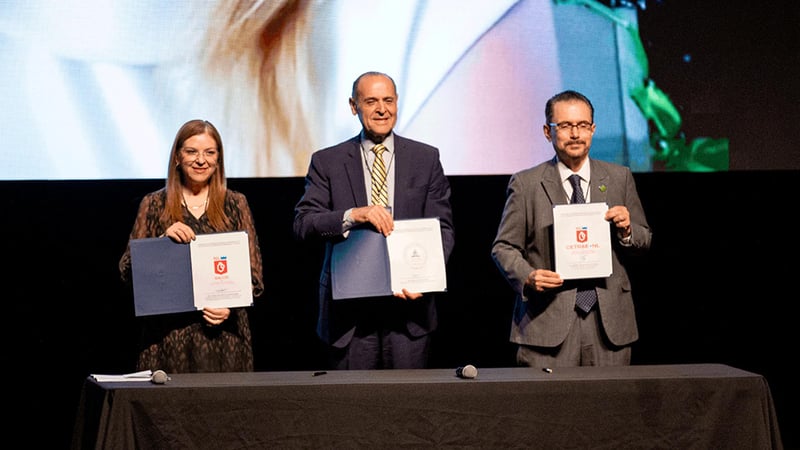
Montemorelos University Signs Organ Donation Agreement, Inspires Compassion Through Music
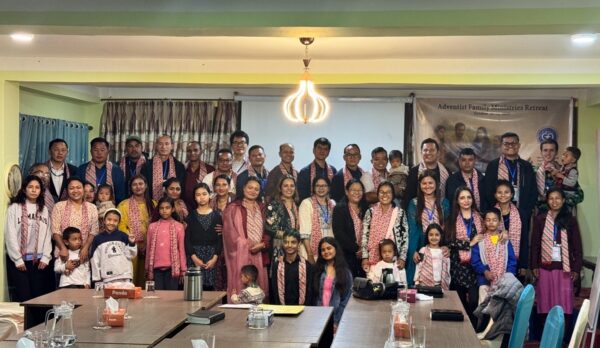
Nepal Adventist Leaders, Families Meet for Reflection and Renewal
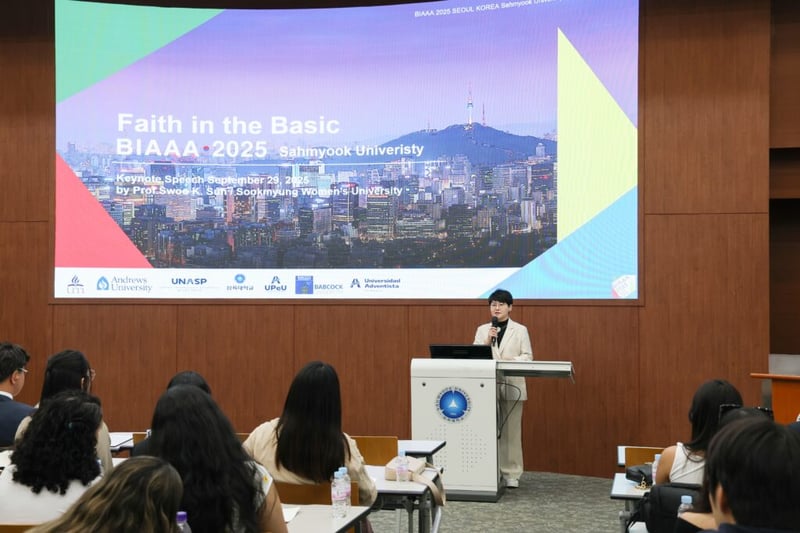
Seoul Conference Explores the Intersection of Faith and Architecture



-
Download your music scores4 years ago
Ghana Mma Mo mmra
-
Download your music scores4 years ago
ASEDA NE NTONTOM
-
Download your music scores4 years ago
King of my life (SDAH 317)
-
Download your music scores4 years ago
Ebre No Aso
-
Download your music scores4 years ago
PRAISE THE LORD
-
Download your music scores4 years ago
We Shall Overcome
-
Download your music scores4 years ago
HOLY HOLY
-
 Devonationals4 years ago
God Wants Four Things from His Children